Bob Grover on Development and the Environment
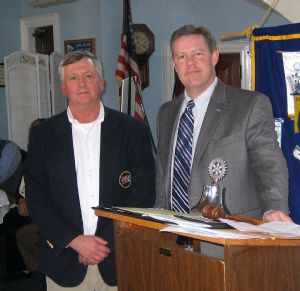
Bob Grover gave a very interesting talk about environmental considerations associated with a recent, large development project at our regular meeting on Wednesday, December 14th.
Bob is Director of Environmental Sciences with Greenman-Pederson Inc. (GPI) in Babylon. He described the work GPI and he did in the planning, design and development of the Sebonack Golf Club in Southampton.
Built on a 300 acre property on the Great Peconic Bay, the Sebonack Golf Club is one of the newest, most elite and most environmentally conscious golf course on Long Island.
A few years ago, GPI contracted with the owner/developer whose vision was to build a truly world class, environmentally-friendly golf course. The goal was to demonstrate that golf course construction and operation does not have to be detrimental to the environment - a combination of links and parkland with a fully integrated, organic system of maintenance.
GPI provided planning, site design and engineering, architecture, environmental analysis and development of organic protocols and construction oversight services for the creation of this unique facility. They partnered with many top consultants in the environmental field. The Long Island Pine Barren Society, The Nature Conservancy, and The Group for the East End also advised on the project.
Golf legend Jack Nicklaus and world famous course architect Tom Doak were the chief course designers whose task was to design a golf course to be golfer friendly, challenging and in harmony with the ecology of the original land.
The original property was run down and overgrown with non-native vines and shrubs. Clearing of areas for the golf course and its facilities allowed for the removal of many invasive plants; these were restored using native shrubs, trees and grasses. An area was also set aside for a wildlife preserve within and around the golf course, and the extensive wetlands on the property were protected through the establishment of buffers and management agreements with various conservation and research organizations - over 94% of the property was preserved in its natural state, and many birds and other native animals have since returned to the site.
Some major innovations were employed in the design to combat the greatest threat modern golf courses pose to the environment - the use of chemical-based treatments to kill disease in plants. These toxins kill natural soil bacteria as well as contaminate groundwater, and are known carcinogens. Sebonack's course managers use natural methods to promote healthy vegetation that is more resistant to disease and pests, instead of relying on chemical treatments, which strip turf of its natural defenses. The greens also have underground liners to collect toxins and prevent them from entering the environment, while fairways will use a water collection device to monitor groundwater seepage in those areas. All drainage from the greens is collected and flows by gravity or is pumped to a dedicated pond where the water can be tested and diluted or treated if needed. The water is then recirculated through a separate greens irrigation system, preventing it from polluting the area's groundwater and the adjacent bay.
Bob is pictured above with Babylon Rotary President Chris Cunningham.